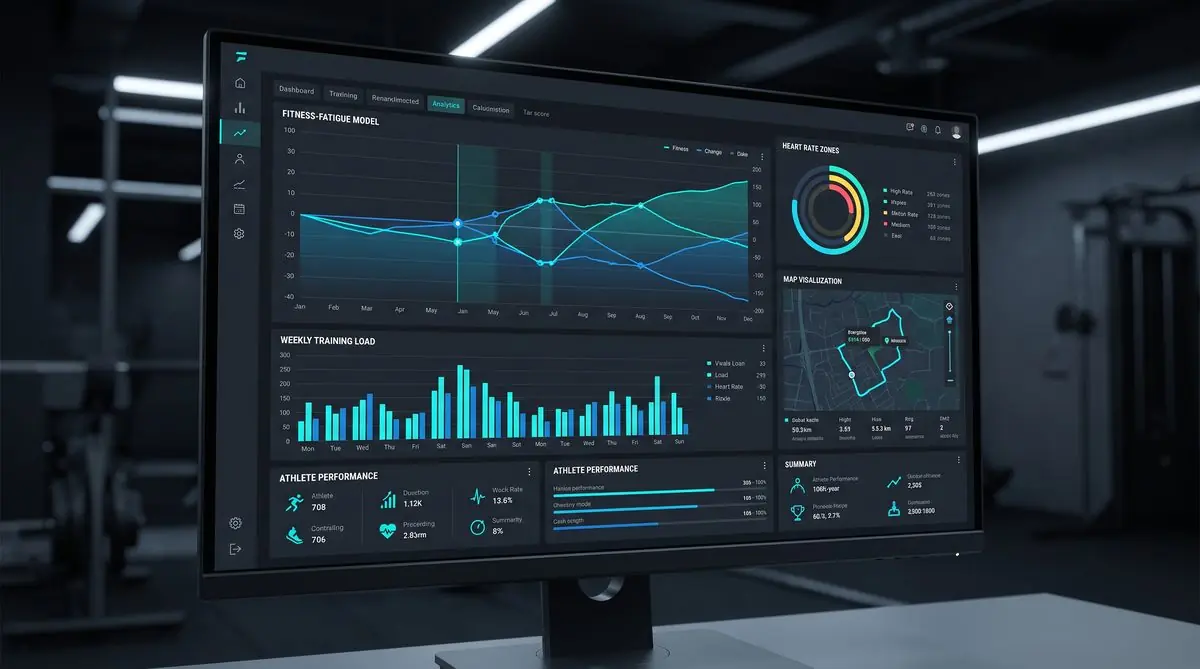
TrainCurve is a training-load platform for endurance athletes — the kind of tool that turns raw workout data into Fitness, Fatigue and Form you can actually act on. The brief was ambitious: a full SaaS with a marketing site, a web app and a native iOS app, built to compete with established players like TrainingPeaks. Here is how we approached it.
The challenge
Endurance software lives or dies on two things: the accuracy of its training-load model and the friction of getting data in. We needed a system that computes CTL/ATL/TSB correctly, syncs from devices, and presents it cleanly on both web and mobile — without a large infrastructure bill.
What we built
- →Web app: Next.js on Cloudflare Workers with Better-Auth and a Consent Mode v2 analytics setup
- →Backend: a Cloud Run API in europe-west1 backed by Cloud SQL Postgres for durable athlete data
- →iOS app: a native SwiftUI client shipped to the App Store
- →Content engine: an SEO blog explaining training-load science to capture high-intent search
Result
A production SaaS running end to end — marketing site, authenticated web app and a published iOS app — on infrastructure that costs a fraction of a traditional stack. See it live at traincurve.com.
The lesson repeats across our SaaS work: a lean, serverless-first architecture lets a small team ship a product that feels like it came from a much larger one.
Making the data useful
A training-load chart only helps when athletes can trust what it says. Fitness, Fatigue and Form are related measures, but they answer different questions: how much work has accumulated, how much strain is recent, and whether the athlete is carrying that strain right now. The interface therefore needs to explain the relationship between the numbers instead of presenting three isolated scores.
That product requirement shaped the work across the stack. Workout data has to reach the service reliably, the calculation needs to remain consistent between web and iOS, and the result needs enough context to support a decision about training. Keeping the computation in a shared backend gives the product one dependable source of truth while each client can focus on presenting it well. That balance—clear metrics for the athlete, a maintainable system for the team—is what makes the finished platform useful beyond a polished launch.