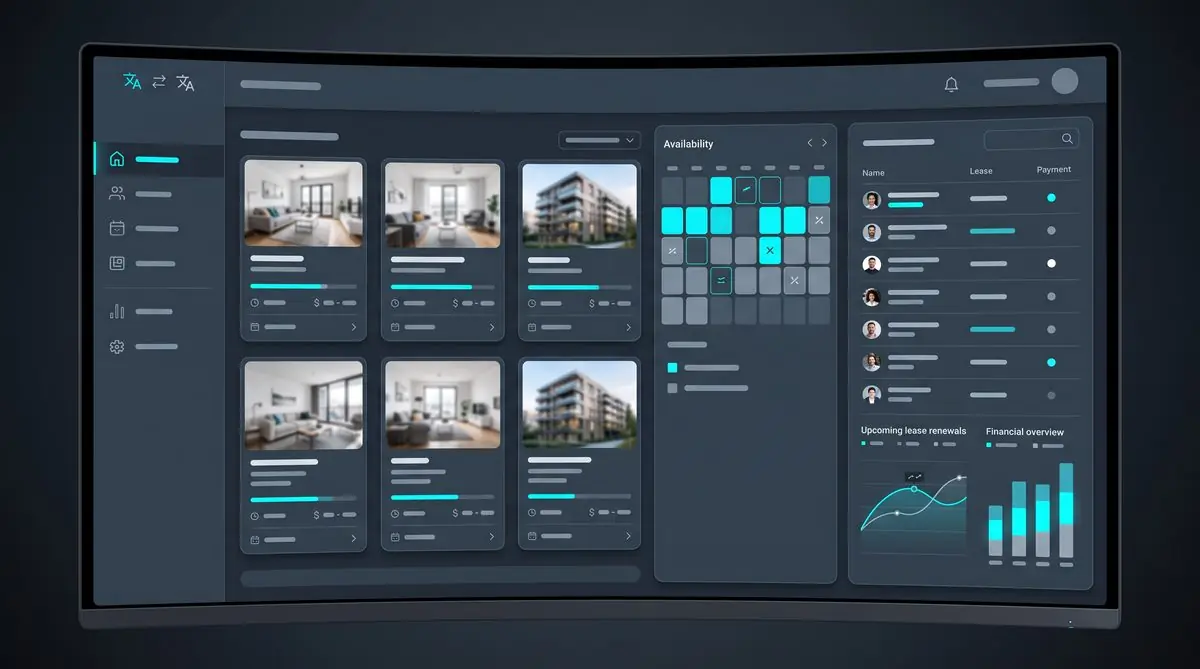
Rentcla is a rental-management SaaS — the software a landlord or property manager uses to keep contracts, tenants and payments in one place. The brief called for a web app and a native iOS app, multilingual from day one, on an architecture that stays cheap as it grows. Here is how we delivered it.
The challenge
Rental software is unglamorous but unforgiving: the data model has to be right, authentication has to be solid, and it has to work in several languages without turning into a maintenance burden. We also had to avoid the classic serverless trap of losing data on ephemeral storage.
What we built
- →Web app: Next.js on Vercel with Neon Postgres and Better-Auth
- →iOS app: a native client for managing properties on the move
- →Internationalisation: a locale-routed setup delivering the product in multiple languages
Result
A multilingual rental SaaS live on web and iOS, on a stack that scales without a heavy bill. See it at rentcla.com.
Getting the fundamentals right — data model, auth, i18n — is what makes a B2B product trustworthy. That is where most of the engineering value in a SaaS actually lives.
Designing for everyday property work
Property management is a chain of small, connected tasks: keep a property record accurate, know which tenant and contract belong to it, and check payment details when needed. If those relationships are unclear, an owner ends up searching across messages and spreadsheets to answer ordinary questions. A reliable data model gives the web app a stable place to bring those details together and gives the mobile client the same structure to work with.
Authentication matters for the same reason. Rental records describe real people and agreements, so access needs to be deliberate. Better-Auth provides the sign-in layer, while Postgres keeps application data in durable storage rather than depending on a temporary server instance. These choices make the system easier to reason about as more properties and users are added.
Internationalisation also belongs in the foundation. When a product supports several languages from the start, translated interface text and locale-aware routes can grow with the product instead of becoming a later rewrite. The result is a web and iOS experience that can serve a wider set of landlords and managers while keeping the underlying product consistent.