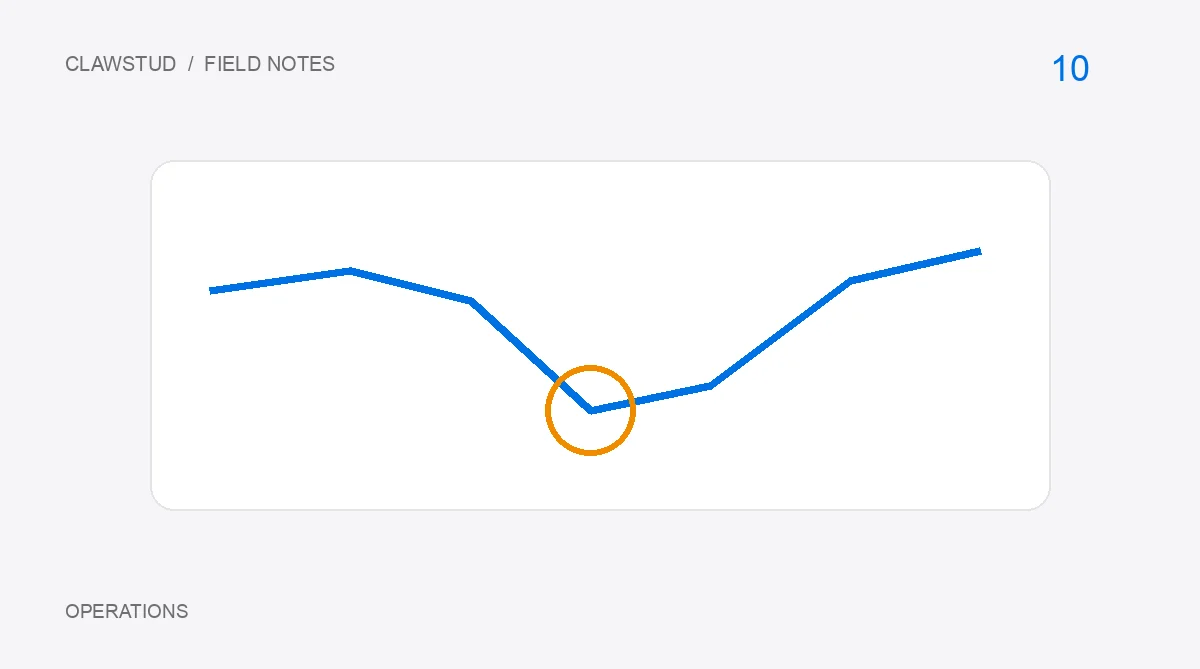
A sudden drop invites an urgent response: change ads, rewrite pages or demand a redesign. That can introduce noise before you understand the problem. A useful diagnosis separates three questions: did activity change, did measurement change, and are we reading the same interval? Work through those questions in order and preserve evidence. The next teammate should be able to continue the investigation rather than reconstructing what the original report showed.
Rule out a misleading comparison
Check dates, time zone, filters and property. Confirm that the selected store corresponds to the domain you are investigating. Compare equivalent periods and note where the available data actually ends. If someone changed a segment, the apparent decline may reflect a different population. Save a screenshot and the report parameters before altering anything. You need to distinguish the original problem from changes made while investigating it, especially when several people are helping at once.
Check that information is still arriving
Google recommends Realtime and DebugView for confirming data collection. Use an identifiable test session with the technical owner and inspect the expected journey. Check for a release, tag-manager update or consent change. A visible test session confirms that case only; it does not establish that every device and customer journey is measured correctly. Record the conditions of the check, including the browser and route, so another person can repeat it and expand the investigation.
Break the change into manageable groups
Compare channels, landing pages, countries and devices without splitting the data into groups too small to interpret. In a hypothetical example, total traffic falls 25%, but the decline is concentrated in a campaign that ended on Friday. That suggests a different investigation from a simultaneous decline across every source. Review the commercial calendar and ask the campaign owner before attributing the movement to a search-engine change or a general failure affecting the whole store.
Look for an independent signal
If measured traffic falls while payments remain stable, investigate tracking without dismissing a change in visitor mix. If organic clicks also fall in Search Console, examine the affected queries and pages. No combination establishes a cause automatically. Crossing sources helps prioritise hypotheses rather than manufacture certainty. Preserve their different definitions and periods when placing numbers side by side. Agreement between two charts is useful context, but it is not a substitute for inspecting the underlying situation.
Record a decision and a review condition
Close the diagnosis with facts, unresolved hypotheses, a proposed action and an owner. If you find a specific instrumentation fault, fix it and repeat the same journey. If the explanation is commercial, define which decision changes and when you will assess its effect. Avoid changing five things together. ClawStud makes traffic, search and payment information accessible in one dashboard; a sound investigation still needs team context and checks in the original sources. A short evidence-led note is more useful than a confident explanation nobody has verified.
Official reference: Google Analytics: Confirm that you are collecting data.
Read next: What an online store dashboard should actually show.
